BISE Lahore Shifts Class 9 Practical Marking to Digital System
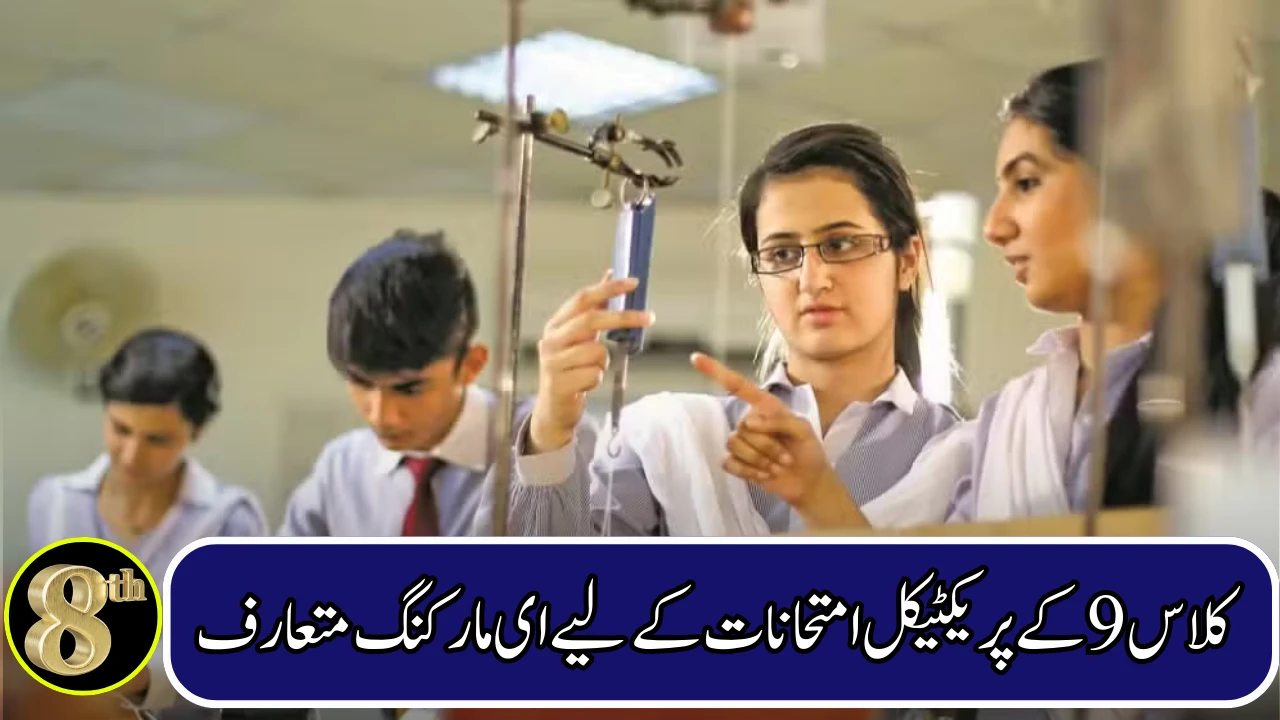
The Board of Intermediate and Secondary Education Lahore has officially introduced an e-marking system for Class 9 practical exams, marking a major step toward digital reform in Punjab’s examination process.
The initiative aims to improve transparency, eliminate marking inconsistencies, and modernize how practical papers are assessed.
Why the Change Was Introduced
According to board officials, concerns had been raised in previous years regarding irregularities in practical exam marking. Under the traditional system, examiners had full authority over practical marks, which sometimes led to inconsistencies and complaints from students and parents.
To address these concerns, the board has decided to centralize the marking of the theory portion of practical papers. This move is expected to ensure fairness and uniform assessment standards across examination centers.
Education authorities in Punjab have emphasized that the reform is part of a broader effort to strengthen credibility and accountability within the examination system.
How the E-Marking System Will Work
Under the new system:
-
Students will attempt practical theory papers on specially designed answer sheets.
-
Each question will have a fixed response space to maintain uniformity.
-
After submission, answer sheets will be scanned at a centralized marking center.
-
Papers will be digitally divided into sections and distributed to examiners online.
Instead of checking full answer sheets, examiners will mark specific questions from multiple papers. This approach reduces individual bias and ensures consistent marking standards.
Examiners will be provided secure login credentials and will assess responses remotely. Monitoring mechanisms will be in place to maintain transparency during the marking process.
Security and Monitoring Measures
To further improve credibility:
-
Surveillance cameras will be installed in practical laboratories.
-
The centralized digital marking system will track examiner activity.
-
Question-wise marking will minimize the risk of mark manipulation.
Officials believe that dividing evaluation responsibilities among multiple examiners will improve accuracy and reduce workload pressure.
Future Expansion of Digital Marking
The board has confirmed that digital marking will gradually expand to other classes and examination categories. Over the next two to three years, more examinations are expected to transition to the e-marking system.
The upcoming ICS (Intermediate in Computer Science) paper will also be assessed through this digital model, signaling a wider rollout across Punjab boards.
What This Means for Students
For students, the introduction of e-marking brings several advantages:
-
More transparent marking
-
Reduced chances of favoritism
-
Standardized evaluation criteria
-
Faster processing of results
Education experts believe that adopting digital assessment methods aligns Punjab’s examination system with modern academic standards.
Final Thoughts
The introduction of e-marking for Class 9 practical exams by Lahore Board reflects a significant shift toward transparency and modernization in Pakistan’s education sector.
As the system expands in the coming years, students can expect a more structured and reliable examination process built on fairness and digital efficiency.